
Borer treatment for Tauranga’s older homes
Little round holes in the floorboards and piles of fine dust under the house: that’s borer. Stu checks how far it has gone in the subfloor and the roof, then treats the timber where the grubs are working. Free quotes.
If Stu’s up a ladder or under a floor, the phone is still answered and he returns your call.
- Rats, mice, cockroaches
- homes, rentals and businesses
- Tauranga to Te Puke
- the Mount, Pāpāmoa, Katikati, Ōmokoroa
- 20 years in pest control
- a family business since 2002
- Make it right, or money back
- free quotes, no hidden fees
What happens next
Before you ring
What changes the cost?
How much of the subfloor and roof has live borer, how easy they are to get into, and how big the house is. The look and the quote are free.
Can it wait?
The grubs tunnel inside the timber for two to four years before they come out, and the damage adds up until boards and joists need replacing.
What happens on the visit?
Stu works along the joists and boards under the house by torch, then the rafters in the roof, and shows you whether the holes are fresh or old before he quotes.

Who comes out
StuProfessional Pest Control
 Tauranga Exterminator is Stu of Professional Pest Control.
Stu or one of his technicians comes out to look at it, Stu quotes, and he and the team do the treatment, right across Tauranga.
- 20 yearsin pest control
- Since 2002a family business
- 10+ yearsacross Tauranga
“…always ring us before arrive…”
“…stu were amazing thankypu very much … pretty educational too if you wanna listen”
What borer looks like
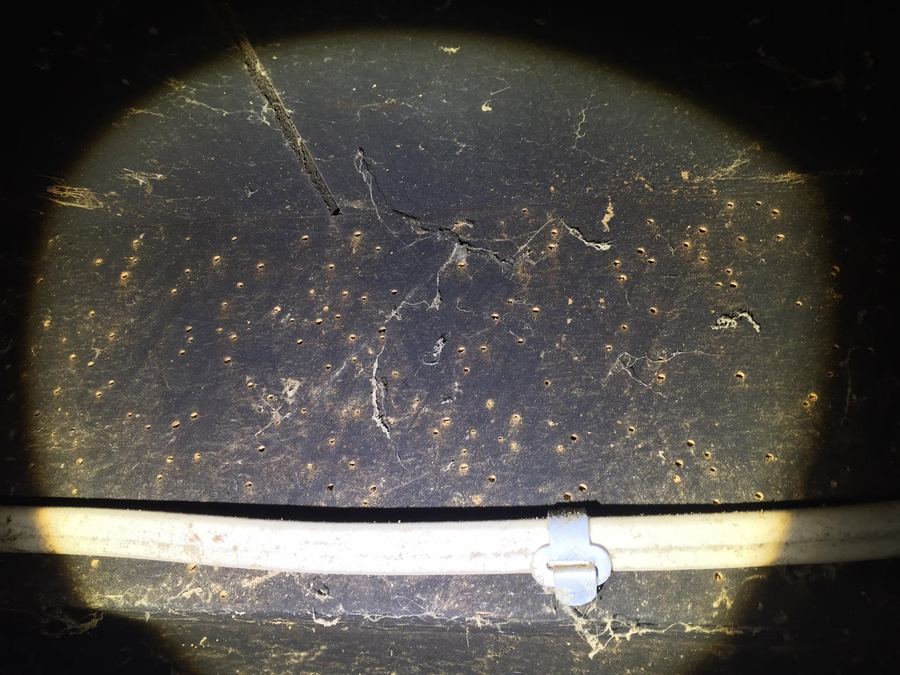
The common house borer leaves round flight holes 1 to 2 mm across; the two-toothed longhorn leaves bigger ones, 3 to 4 mm, and is hard on rimu floors. Under the house you see them along the joists and the underside of the boards, often with little piles of fine dust below.
The grubs tunnel inside the timber for two to four years, then chew their way out between October and February and fly. So fresh holes and new dust in spring and summer mean the borer is still working; old, dark holes with no dust can be old damage. Stu tells you which.
Soft, crumbly edges on the boards, or a floor that gives a little underfoot, mean the damage has gone further than the holes suggest. That’s worth a look before the carpet goes down or the house goes on the market.
Which homes get it
Boron treatment of house framing began in 1952. Before that, native timber and some of the first pine framing went in untreated, and untreated kiln-dried framing was allowed again from 1995 until 2004. Damage builds up as a house gets older, until boards and joists need replacing.
Around Tauranga that points to the older streets: the village homes of Greerton and the post-war houses of Merivale beside it, Otūmoetai’s homes from the 1950s on, and the older parts of Te Puke. A house of the 1950s can go either way, so Stu checks the timber rather than guessing from the year.
What Stu does about it
Checks under the floor
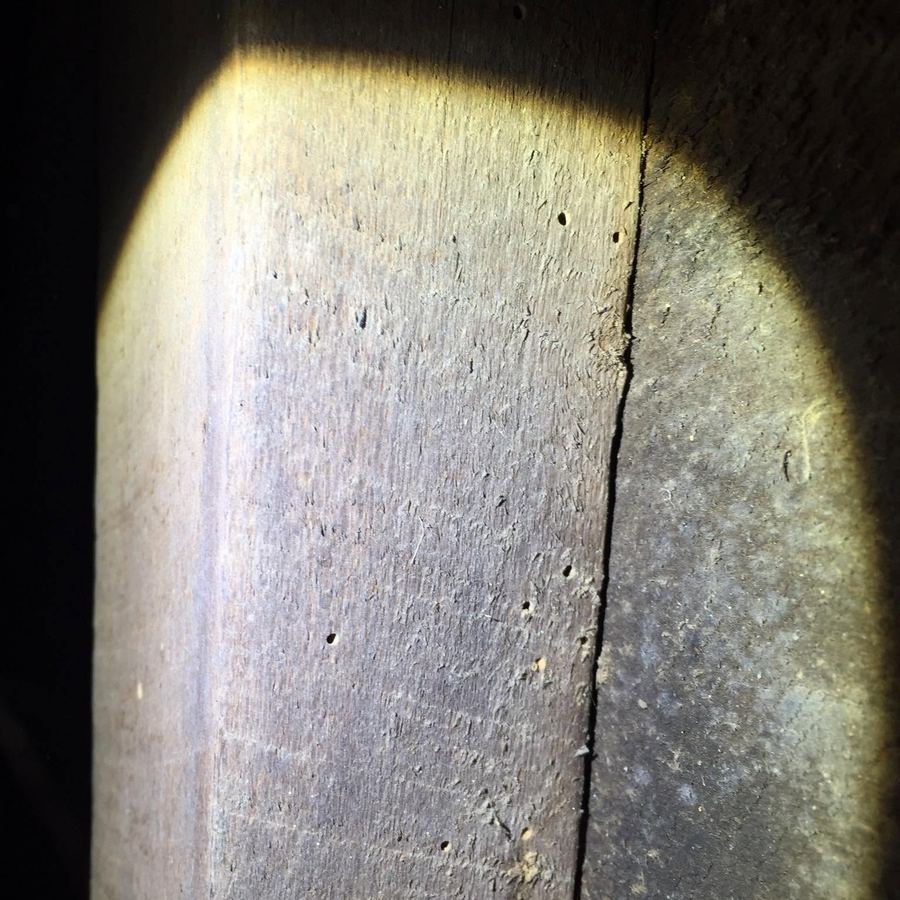
Torch in hand, Stu works along the joists, bearers and boards, the way his own borer photos were taken.
Checks the roof
Rafters and ceiling timbers get the same look, because borer doesn’t stop at the floor.
Reads the damage
Active or old, how far it has spread, and whether any timber is past saving.
Treats the timber
The affected timber is treated where the grubs are working, and Stu tells you what to watch for after.
Borer, close up
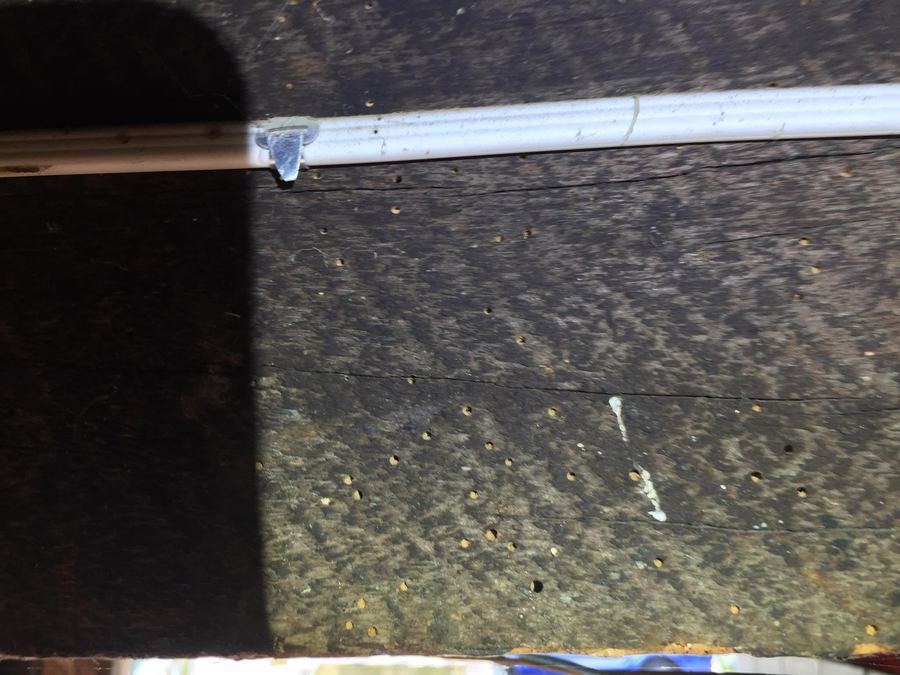
These are Stu’s own photos from under a floor: the holes, the dust and how they line up along the timber. If yours looks like this, send a photo with your quote request.
They were taken on a job with borer still at work: clean, round holes with the fine dust the grubs push out piled up below. Finished, older damage looks darker, with no fresh dust. That difference decides whether the timber needs treating now.
What customers say
Great experience from start to finish! From the first communication, to the friendly service, and the final result, all was seamless.
Thanks we'll be back :)
These guys are great, they turned up on time!!!! and where happy to spend the time to fully explain what they did and how it worked. I would definitely recommend them to others and will be using their services again in the future, thanks :-)
Questions
Another question? Call 0800 164 102, or put it on the quote form and Stu will answer it.
When is borer active?
The adults chew out and fly between October and February, so fresh holes and new dust show up through spring and summer.
Are old holes a problem?
Not always. Dark holes with no fresh dust can be old damage. Fresh, clean-edged holes and little piles of dust mean the borer is still working. Stu tells you which you’ve got.
Does a 1950s house have treated framing?
Not always. Boron treatment began in 1952, so homes from around then can go either way. Stu checks the timber rather than guessing from the year.
Get a free quote for borer
Tell Stu what you’re seeing and where, and he’ll come back with a free quote.

What to send Stu
- A photo of what you found: the droppings, the bug, the holes or the nest
- Where you’ve seen or heard it
- How long it’s been going on
- Who’s at home: children, pets
- For a business: the kind of premises and your trading hours
Once it’s sent, Stu looks over what you’ve told him and any photos, then gets back to you to work out what you’ve got and give you a free quote. What he quotes is what you pay.
Thanks, we’ve got your details.
Stu will be in touch to work out what you’ve got and give you a free quote. If you’d rather talk, call 0800 164 102.